
A Lifetime of Costs Requires a Claim Built for the Long Term, Not Just Today's Medical Bills
Amputation injuries after a Houston car accident are among the most life-changing harms a crash can cause. Some people lose a limb at the scene. Others go through surgery days or weeks later, after doctors can't save a crushed, burned, or infected arm or leg. Either way, life afterward looks very different.
The costs don't end when the hospital stay does. Prosthetic limbs, therapy, home changes, and lost income can continue for decades. Many injured people don't realize how large those future costs are until long after an insurance company has made its first offer.
That's why amputation claims need to be built for the long term, with medical and financial professionals documenting a lifetime of needs. Bringing in a Houston car accident lawyer early helps make sure the claim reflects those future costs, not just the bills that have arrived so far.
|
What an Amputation Claim Should Include
|
How Car Crashes Lead to Amputation
Some amputations happen at the moment of impact. More often, a limb is so badly crushed or broken that surgeons must remove it to save the person's life. Severe burns, damaged blood vessels, and serious infections can also lead to amputation in the days or weeks after a crash.
Certain crashes carry a higher risk. Motorcycle accidents and pedestrian crashes leave the body almost completely exposed. Collisions with large trucks can crush a passenger compartment, pinning arms and legs. Houston's fast-moving highways and heavy truck traffic make these crashes all too common.
The timing of an amputation can affect a claim. When a limb is removed after several surgeries to save it, medical records must clearly connect the amputation to the crash. Insurance companies sometimes argue that later complications weren't caused by the collision. That link needs to be documented from the start.
Why Amputation Claims Are Different
Most injury claims focus on getting a person back to where they were before the crash. An amputation is different, because there's no full recovery from losing a limb. The injury creates needs that change and grow over a lifetime, and a claim has to account for all of them.
The early medical bills only capture a small part of the true cost. Emergency care and surgery may be covered in the first few months. Prosthetic replacements, ongoing therapy, and career changes often stretch out over decades, and those future costs can far exceed the initial bills.
That's what makes settling too early so risky. Once a settlement is signed, the claim can't be reopened, even if costs turn out to be much higher than expected. An insurance company's quick offer is often based on today's bills, not on a lifetime of needs.
Lifetime Prosthetic Costs
A prosthetic limb isn't a one-time purchase. A single prosthetic leg can cost thousands to tens of thousands of dollars, and most wear out and need to be replaced every few years. Advanced devices, like computerized knees, can cost even more.
Replacement is only part of the expense. The socket that connects the prosthesis to the body must be refit as the residual limb changes shape. Liners, components, and repairs add up over time. Many amputees also need more than one prosthesis, such as a separate device for bathing or certain activities.
For a younger person, the numbers can be staggering. Someone injured in their 30s may need a new prosthesis many times over the rest of their life. A claim that only covers the first device leaves the injured person paying for every one that follows.
Rehab, Therapy, and Ongoing Medical Care
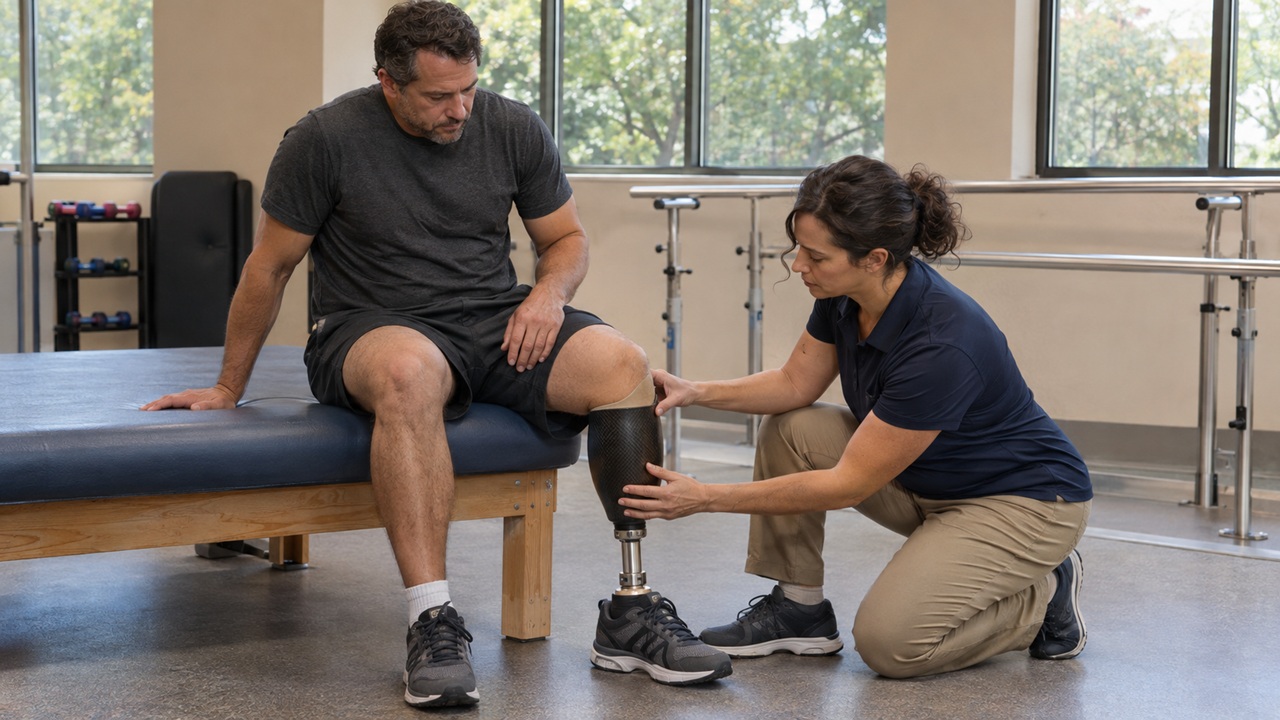
Learning to live with a prosthesis takes extensive rehabilitation. Physical therapy helps with strength, balance, and walking. Occupational therapy helps with daily tasks like dressing, cooking, and returning to work. This training often continues long after the first prosthesis is fitted.
Pain doesn't always end with the amputation. Many amputees experience phantom limb pain, which feels like pain in the missing limb. Others have pain in the remaining part of the limb. Skin problems, nerve issues, and the need for revision surgery can also arise years later.
The emotional toll is just as real. Depression, anxiety, and post-traumatic stress disorder (PTSD) are common after a traumatic amputation. Counseling and mental health care should be part of the claim, because healing involves far more than the physical injury.
Home and Vehicle Modifications
Coming home after an amputation often means changing the home itself. Families may need ramps, widened doorways, stair lifts, grab bars, and accessible bathrooms. Some homes simply can't be adapted, which may mean moving to a new one.
Getting around can require changes, too. A vehicle may need hand controls, a left-foot accelerator, or other adaptive equipment. Some people need a different vehicle altogether. These costs are easy to overlook, and insurance companies rarely offer to pay for them without a fight.
Every modification should be documented with estimates from qualified professionals. Those estimates help show the real cost of living with an amputation. They also make it harder for an insurance company to dismiss these expenses as optional.
Lost Earning Capacity
Lost wages cover the paychecks missed while recovering. Lost earning capacity is different. It covers the reduction in what a person can earn over the rest of their working life because of the injury.
That loss can be enormous for Houston's construction, energy, industrial, and service workers. A person who can no longer climb, lift, stand for long periods, or operate equipment may need to change careers. Some can't return to work at all. Others must accept lower-paying jobs.
Proving lost earning capacity usually takes help from vocational professionals and economists. They look at the person's work history, skills, age, and limitations. Then they estimate how the amputation will affect earnings over decades.
Why Life Care Plans Matter
A life care plan is a detailed roadmap of every medical and personal need a person will have over their expected lifetime. It's usually prepared by a life care planner working with doctors, therapists, and prosthetists. The plan lists each future need, how often it will arise, and what it will cost.
An economist can then translate that plan into a present-day value. That gives insurance companies, and juries if necessary, a concrete number backed by medical evidence. It replaces guesswork with a documented picture of what the injured person will actually need.
Without a life care plan, many future costs are easy to overlook or undervalue. With one, each prosthesis, therapy session, and home modification has a documented place in the claim. That can make a major difference in the final outcome.
Costs a Life Care Plan Should Account For
A thorough life care plan looks at every part of life after an amputation. Here are some of the most common categories and why they continue over time.
| Category | Examples | Why It Recurs |
|---|---|---|
| Prosthetics | New limbs, sockets, liners, repairs | Devices wear out and limbs change shape |
| Rehab and Therapy | Physical, occupational, and gait training | Each new device requires new training |
| Medical Follow-Up | Pain management, skin care, revision surgery | Complications can arise years later |
| Mental Health Care | Counseling for depression, anxiety, or PTSD | Emotional effects often last long term |
| Home Modifications | Ramps, accessible bathrooms, stair lifts | Needs change with age and mobility |
| Vehicle Modifications | Hand controls, adaptive equipment | Equipment must be replaced with each new vehicle |
| Household Help | Help with chores, yard work, and daily tasks | Limitations continue for life |
Each of these costs should be supported by professional opinions and realistic pricing. The more complete the plan, the harder it is for an insurance company to argue that future needs are speculative. Learning how compensation works in a Texas car accident claim can help injured people understand what's at stake.
How Texas Law Affects an Amputation Claim
Texas follows a proportionate responsibility rule under Texas Civil Practice and Remedies Code Section 33.001. An injured person can recover compensation as long as he or she is 50% or less at fault. Any award is reduced by that person's share of the blame.
In a typical car crash case, Texas doesn't cap compensation for injuries. Caps apply in certain other types of cases, such as medical malpractice and some claims against government entities. That means a car crash amputation claim can seek the full value of a lifetime of losses.
Texas also limits recovery of medical expenses to the amounts actually paid or incurred, under Section 41.0105. That rule makes careful documentation of future costs even more important. Most claims must also be filed within two years of the crash, so there's no time to waste.
Steps to Protect an Amputation Claim
The decisions made in the months after an amputation can affect a claim for years to come. These steps help protect both recovery and compensation.
- Follow Every Medical Recommendation – Gaps in care can give insurance companies a reason to question the severity of the injury.
- Keep Every Bill and Receipt – Save records for prosthetics, therapy, medications, travel to appointments, and home changes.
- Track Work Changes – Document missed work, job changes, and any reduction in hours or pay.
- Keep a Daily Journal – Write down pain levels, limitations, and activities you can no longer do.
- Don't Accept an Early Settlement – A quick offer rarely accounts for a lifetime of costs.
- Avoid the At-Fault Driver's Insurance Company – Don't give statements or sign anything, and send all contact to a lawyer.
Amputation claims are among the most complex injury cases. They often involve medical professionals, life care planners, vocational professionals, and economists. Talking with a lawyer early gives that team time to build a complete picture before any deadline arrives.
Planning for a Lifetime After Losing a Limb
Smith & Hassler has fought for injured Houstonians since 1989, and we've recovered more than $1 billion for injured Texans. Our attorneys understand the lifetime costs that come with catastrophic injuries. We work with the professionals needed to document every one of them.
Our case results include a $5.8 million recovery in a motorcycle accident involving brain and orthopedic injuries. We handle cases on a contingency fee basis, so there's no fee unless we win. If you can't come to us, we'll come to you.
Lost a limb in a Houston crash? Make the right call and get a team that plans for your whole future.
"I was represented by Daragh Carter in a personal injury case. He worked diligently with medical personnel to find out what was wrong with my body. After a mediation with the insurance company, he worked on my behalf to obtain a fair settlement. I am very pleased with the outcome." - Teresa G., ⭐⭐⭐⭐⭐