
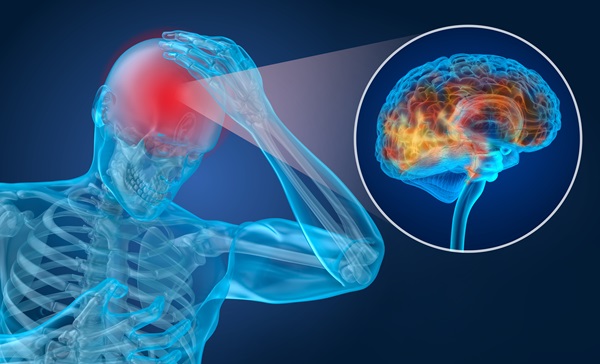
Concussion after a car accident has a way of sounding smaller than it feels, and that is especially worth remembering during Brain Injury Awareness Month. It's easy for an insurance company to treat it like a minor bump and for a crash survivor to tell themselves they just need a day or two of rest. Yet when your head snaps forward and back in a collision, your brain can be injured in ways that don't show up on a scan or follow a simple timeline, and that disconnect between how things look and how they feel is where many people get hurt twice.
What Actually Happens Inside The Brain After A Crash?
When you hear the word concussion, you're talking about what doctors call a mild traumatic brain injury, or mild TBI. Medically, the term "mild" refers to the absence of obvious structural damage on imaging and no prolonged unconsciousness, but it doesn't mean the consequences are minor or short-lived. During a car crash, the head rapidly accelerates and decelerates, which causes the brain to shift and rotate inside the skull, stretching delicate axons and disrupting the neurochemical balance that keeps your thinking, mood, and coordination running smoothly.
That is why so many crash survivors walk out of the emergency room with a "normal" CT and still feel anything but normal. According to the CDC, concussion symptoms often show up as headaches, dizziness, sensitivity to light or noise, memory problems, and a sense of cognitive fog that may evolve over days rather than minutes. For some people, these symptoms fade within a couple of weeks, but a significant minority develop post-concussion syndrome, where problems with pain, sleep, mood, and concentration linger for months and interfere with work, driving, and relationships. When that happens, you're not dealing with a simple headache; you're living with an invisible injury that can touch every part of your day.
For example, our Houston car accident lawyers often see clients who try to push through those early days after a crash because they don't want to miss work or make a big deal out of it. They go back to a job that demands focus or physical coordination, only to find that fluorescent lights, computer screens, or routine conversations suddenly feel overwhelming, and their performance starts to slip in ways supervisors do not always understand.
Why Concussion Symptoms Are Easy To Miss
One of the hardest parts of a crash concussion is that the brain doesn't always send clear warning flares right away. In the first hours after a collision, adrenaline, shock, and relief at simply being alive can mask the signs of injury. What feels like a headache worth sleeping off or a little grogginess after a long day can sometimes be an early signal that the brain is struggling. Some symptoms demand immediate emergency care, while others require same-day evaluation rather than a wait-and-see approach.
Emergency Symptoms That Require Immediate Care
These are danger signs that mean you should call 911 or go to the emergency room right away rather than waiting to see if things improve at home. These include:
- Loss of consciousness that lasts more than a minute or two
- One pupil that suddenly appears larger than the other
- Seizure at the scene or later the same day
- Repeated vomiting after the crash
- Asevere headache that keeps worsening instead of leveling off
- Slurred speech, extreme confusion, or trouble recognizing familiar people or places
- New weakness, numbness, or loss of coordination in the arms or legs
Same-Day Symptoms That Should Not Be Ignored
These signs often get brushed off, but they still mean the brain has taken a real hit and deserves prompt medical attention:
- Even a brief loss of consciousness, including “seeing stars”
- Any gap in memory around the collision, before or after impact
- Dizziness, balance problems, or blurred or double vision
- Sensitivity to light or noise that is new after the crash
- A heavy sense of cognitive fog, trouble tracking conversation, or feeling slowed down
How Second Impact And Crash Mechanics Make Things Worse
After a head injury, the brain is in a vulnerable state. If a second concussion occurs before the first one has healed, the brain can swell rapidly in a condition known as second impact syndrome. This often leads to catastrophic results far out of proportion to the second hit. While this condition is rare, medical sources and brain injury organizations take it seriously because when it happens, it's often life-changing or fatal.
- Second Impact Syndrome After A Crash: This isn't just a sports injury concept. If you sustain a concussion in a collision, then get into another crash, fall, or even take a seemingly minor blow to the head while your brain is still recovering, the risk of severe swelling and rapid deterioration goes up. That's why doctors are so careful about gradual return-to-activity guidelines.
- Crash Mechanics That Influence Brain Injury: The way the collision happens also matters. Rollover and side-impact crashes are consistently associated with more serious traumatic brain injuries because they expose the head to rotational as well as linear forces, which can be especially damaging to brain tissue. Airbags and modern vehicle designs reduce the risk of death overall, but the same devices that save your life can still deliver enough force to cause a concussion, neck injury, or facial trauma.
When Should You Talk With An Attorney About A Crash Concussion?
If your concussion symptoms are not following a simple, steady improvement curve, or if your life at home or on the job feels meaningfully different from what it did before the collision, that is often the point where the Houston car accident lawyers at Smith & Hassler can help. We can review your records, talk with your treating providers, and coordinate the additional evaluations that may be needed to fully capture how this injury has affected you. We can also deal directly with the insurance company, so you're not trying to negotiate the value of your own brain function while you are still in recovery.
Smith & Hassler takes brain injuries seriously because we see the gap between how they are perceived and how they actually play out in real lives. If you're dealing with concussion symptoms after a Houston car crash, we invite you to contact us to set up a free consultation and discuss what accountability and a safe recovery might look like in your case. A conversation does not obligate you to move forward, but it does give you a clearer picture of your options before time limits close the door on your claim.
"Smith and Hassler law firm has been more than amazing! They go above and beyond what their title is, they truly care about you as an individual and what you are going through, not just a paycheck to them" – J.S.,⭐⭐⭐⭐⭐