
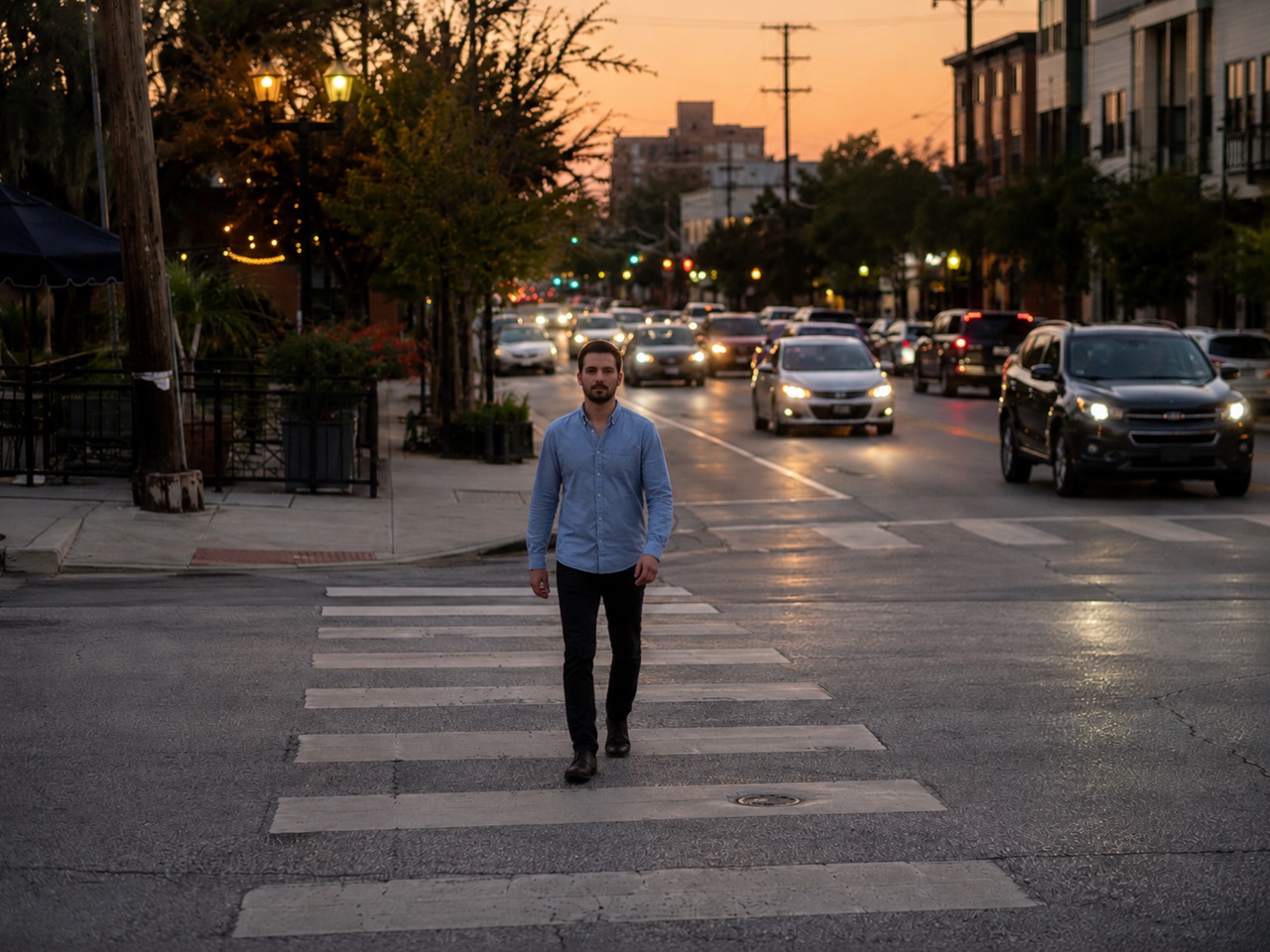
What the Record-Breaking Fatality Numbers Mean for Pedestrians, Cyclists, and the Families of Those Who Didn't Make It Home
The numbers that came out of 2024 should have stopped Houston in its tracks. According to Texas Department of Transportation crash data reported by KPRC, 345 people were killed in traffic crashes on Houston roadways in 2024, the deadliest year ever documented on Houston streets. Among those deaths, 119 were pedestrians, roughly one pedestrian killed every three days in a single city.
Those numbers have finally produced a response. Houston City Council recently approved more than $130,000 for pedestrian safety improvements in the Heights, including new crosswalks, sidewalk upgrades, roadway striping, and rectangular rapid flashing beacons along West 11th Street and at the intersection of White Oak Drive and Greenleaf Street. It's a meaningful step in a neighborhood where walking is part of daily life. But infrastructure improvements don't undo the harm already done, and they don't reach the families of people already killed or seriously hurt on Houston streets.
When a Houston pedestrian accident or any other serious crash results from another driver's negligence, the injured person and their family deserve legal representation that fights for the full compensation they're owed. Smith & Hassler has recovered over $1 billion for injured Texans over more than 30 years, and our personal injury attorneys know how to hold the right parties accountable when Houston's roads claim another victim.
What the Deadliest Year on Record Actually Reflects
The 345 fatalities recorded in 2024 didn't happen because Houstonians suddenly became worse drivers. They happened because of a collision between the city's scale, its road design philosophy, and the behaviors of individual drivers who made choices that killed or seriously injured people. Understanding what's actually driving the numbers matters for determining who is legally responsible when something goes wrong.
Houston has long held the distinction of being the deadliest major metro area in the nation for traffic fatalities, a product of factors including high speed limits on surface arterials, limited pedestrian infrastructure in large portions of the city, and a driving culture shaped by years of car-centric urban planning. Adding to that baseline are the behavioral factors that show up in crash after crash: distracted driving, impairment, speeding, and failure to yield to pedestrians in crosswalks.
Pedestrians Face the Highest Consequences When Drivers Fail
Of the 345 people killed on Houston streets in 2024, 119 were on foot. That proportion, more than one in three fatalities being pedestrians, reflects how completely exposed a person on foot is when a driver makes a mistake. There is no steel frame, no airbag, and no crumple zone absorbing the impact. The crash forces transfer directly to a human body, and the injuries that result from a vehicle striking a pedestrian are often catastrophic.
The crash scenarios that produce the most serious pedestrian injuries on Houston roads include:
- Crosswalk Accidents: A driver who fails to yield to a pedestrian in a marked or unmarked crosswalk, whether at a signalized intersection or a mid-block crossing, is operating in violation of Texas traffic law and bears direct liability for resulting injuries. The Heights improvements target several of these crossing points precisely because of documented failure patterns.
- Distracted Driving Pedestrian Crashes: A driver looking at a phone while approaching a crosswalk or turning through an intersection has effectively removed themselves from the information they need to avoid hitting someone on foot. These crashes happen across Houston at every time of day.
- Left-Turn Crashes at Intersections: Drivers turning left across oncoming traffic who don't check for pedestrians entering the crosswalk on the far side are one of the most consistent sources of serious pedestrian injuries at signalized intersections in the city.
- Parking Lot and Driveway Accidents: Pedestrians navigating parking lots and driveway exits face a specific risk from drivers who are focused on traffic rather than people on foot. These crashes occur across the city's commercial corridors and produce significant injuries even at low speeds.
- Hit-and-Run Crashes: Houston's hit-and-run accident problem is real and persistent, and pedestrians bear the brunt of it. A pedestrian struck by a driver who flees the scene faces not only serious injuries but a more complicated path to compensation that requires understanding how uninsured motorist coverage and other legal mechanisms can fill the gap.
Cyclists Are Part of the Same Dangerous Picture
The same road conditions that put pedestrians at risk also put Houston cyclists at risk. The city's bicycle dooring accident problem, the exposure cyclists face on roads without protected infrastructure, and the high-speed arterials that characterize much of Houston's street network all contribute to a cycling environment that produces serious injuries with regularity.
When a driver cuts off a cyclist, opens a car door into a bike lane, or fails to yield at an intersection, the legal framework is the same as in any other collision: the driver whose negligence caused the crash bears liability for the resulting harm. The fact that the victim was on a bicycle rather than in a car doesn't reduce the value of that claim or the seriousness of the injuries involved.
What the Heights Safety Improvements Do and Don't Change
The $130,000 in improvements approved for the Heights is a welcome development for a neighborhood that has long needed better pedestrian infrastructure. Rectangular rapid flashing beacons at White Oak Drive and Greenleaf Street, enhanced crosswalks along West 11th Street, and sidewalk improvements throughout the corridor will make those specific locations safer than they were before.
What those improvements don't change is the legal landscape for people injured before they were installed, or the ongoing risk at the hundreds of other Houston intersections and crossings that don't have equivalent infrastructure. As was noted in the KPRC report, street design must account for everyone who uses the roadway, not just motorists. Better pavement markings, more visible crossings, and pedestrian-activated warning systems help create clearer expectations for both drivers and people on foot. But they only work when drivers are paying attention and following the law, and when they aren't, the consequences continue to fall on people who had no say in the matter.
After a Houston Pedestrian or Cyclist Crash, Evidence Disappears Fast
The evidence that builds a strong injury case in a pedestrian or cyclist crash has a short window. Surveillance footage from nearby businesses and traffic cameras gets overwritten. Skid marks fade. Witnesses become harder to locate. The at-fault driver's insurer begins building its version of events almost immediately.
Smith & Hassler knows how to move quickly after a serious crash, secure the evidence that matters, and build a case that insurance companies can't ignore. We've helped clients secure results that reflect the full extent of what was lost, not just what an adjuster was initially willing to offer.
Hurt on a Houston Street? We're Ready to Fight for You.
Smith & Hassler represents injured pedestrians, cyclists, and accident victims throughout Houston and the surrounding area. If you or someone you love was seriously hurt or killed because a driver wasn't paying attention, wasn't yielding, or wasn't where they were supposed to be, we want to hear your story. There are no upfront fees and no costs of any kind unless we recover compensation for you. Contact us today for a free consultation.
"I would like to thank you and your team for your attentiveness and going the extra mile in my case. Smith & Hassler explained the process with due diligence and proceeded in supporting me through a very bad situation. Thanks again." — S.W., ⭐⭐⭐⭐⭐